How my 300,000+ mile Prius is accelerating my path to financial independence
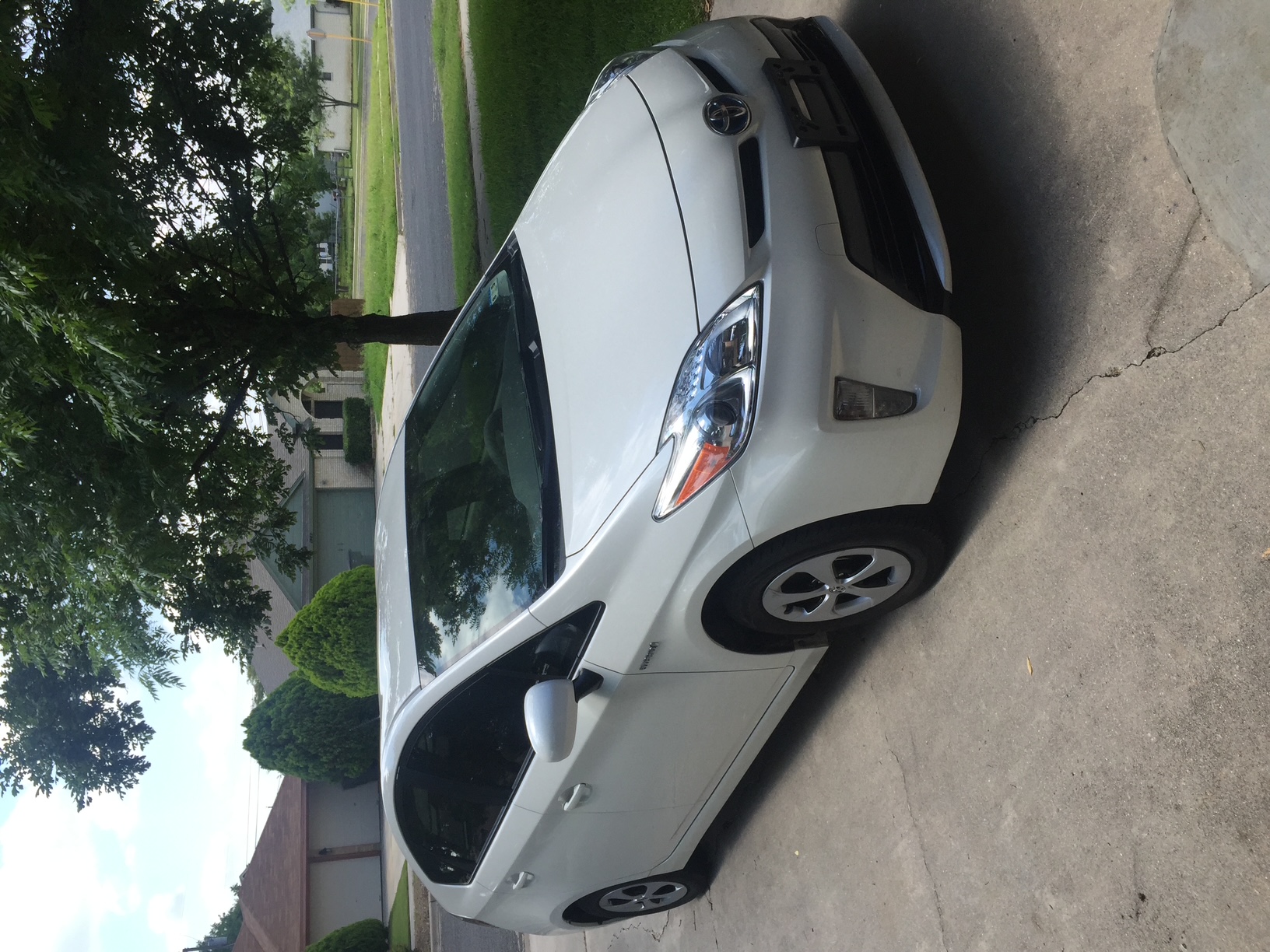
Below is a photo of my 2012 Prius, which I purchased during the summer of 2015. That decision became one of the best financial decisions I ever made. I originally purchased the vehicle so I could earn a side income driving for Uber, but this absolute unit of a car became so much more than that.
It became a powerful tool that helped accelerate my journey towards financial independence.
When I actually sat down and did the math, I discovered my Prius achieved an extremely impressive $0.20 per mile operating cost while potentially saving more than $130,000 in vehicle expenses over the course of 11 years of ownership.
Intriguing? Let's take a look at the top five reasons owning a reliable Japanese economy car to 326,000 miles can be a life changing financial hack.
Used Prius Wealth Effect Number 1
Let Someone Else Take The Depreciation Hit
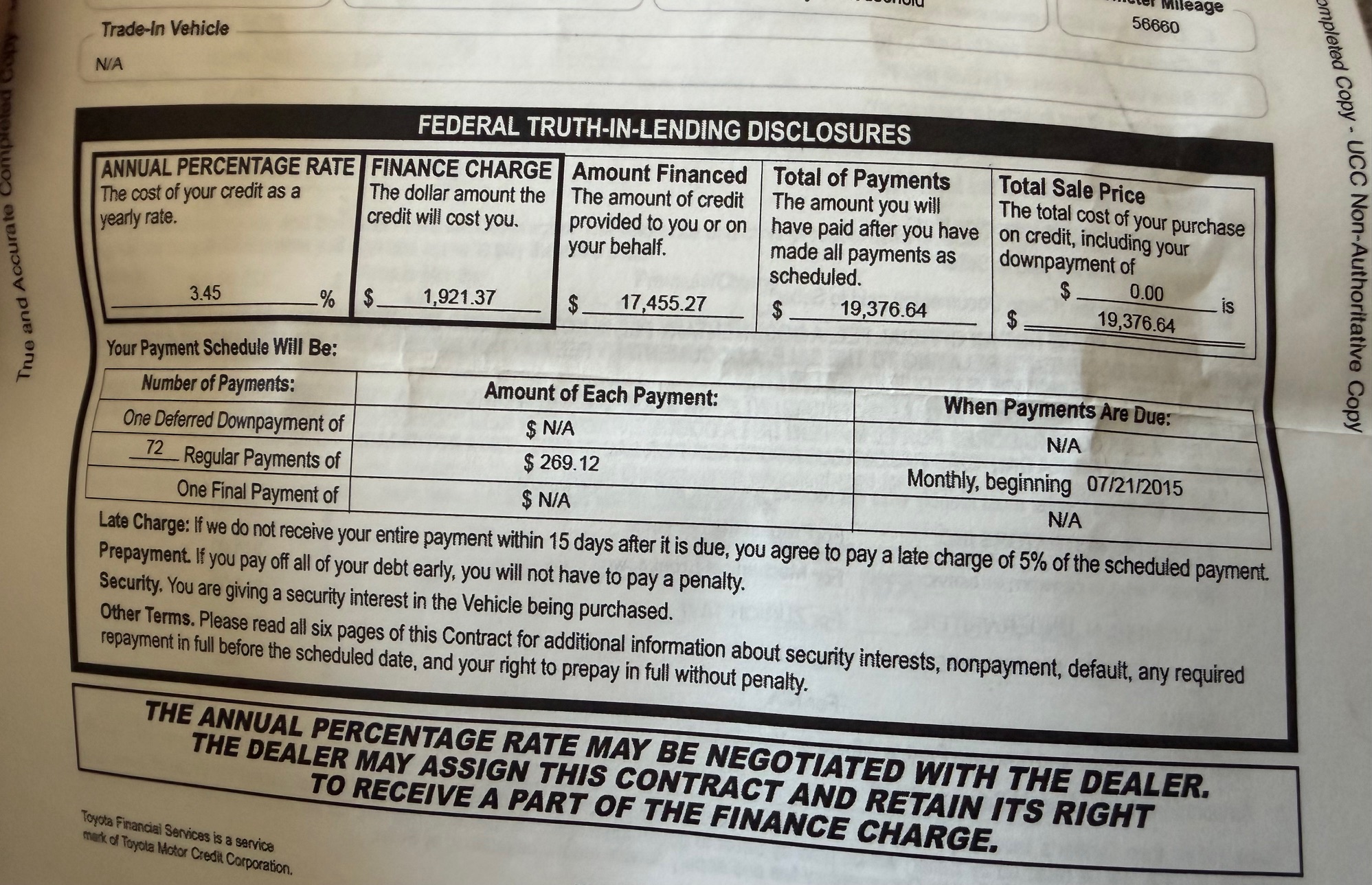
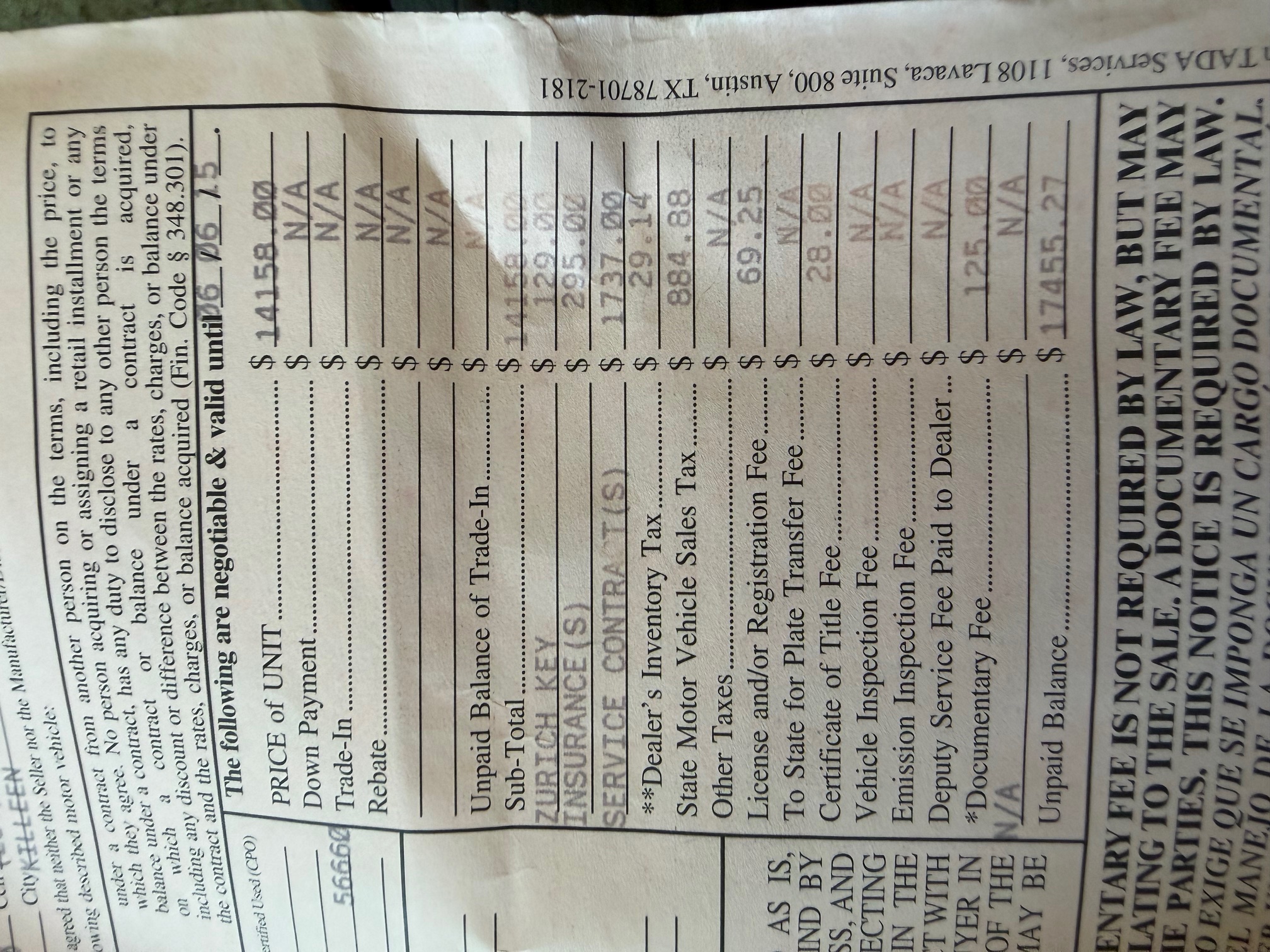
I purchased this Prius Certified Used at 56,660 miles, so I avoided paying full retail price. At the time, brand new models were hovering around $27,000-$30,000 for new units. I financed $17,455.27 out the door with extended warranty coverage up to 100,000 miles.
56,660 miles is just broken in for a Toyota, so the car still looked, drove, and behaved like a brand new Prius. I was getting new car performance and reliability for an approximate 40% discount right off the bat.
The initial owner took the bulk of the depreciation hit, and I stepped in to buy after the depreciation curve began to slow down.
I sometimes roll my eyes when a lot of these financial gurus lecture people about fiscal responsibility. The truth is that saving money in today's economy is harder than ever. Many people buy new cars knowing that they are financial black holes because:
1) They don't want the hassle of unexpected shop repair downtime
(2) They want the warranty coverage
(3) They are worried that costs of repairs will exceed the value of any used car they acquire.
With most other makes and models, I would say these are valid concerns. But with a Toyota certified used car? Highly unlikely.
When I bought my certified used Prius in 2015 for $17,455, many people would have considered it just a practical economy car.
300,000+ miles later, I now see it as something else entirely — a financial tool that quietly helped accelerate my path toward financial independence.
Used Prius Wealth Effect Number 2
Used Toyotas Last Far Longer Than Their Financing Terms
Why do many people end up trading in their vehicles shortly after paying them off? I haven't conducted official research into the matter, but life experience has shown me that people do this because:
(1) Fear that the vehicle will break down and repairs will exceed the resale value of the vehicle
(2) Boredom or desire for the next shiny object in their driveway
(3) A smooth talking salesman convinced them of a need of a new vehicle while waiting in the service department
(4) Some people view a car payment as a "fact of life" and don't even question always having one.
(5) An accident totaled the car
(6) Changing family dynamics like having more children in the household
Out of these factors, I'd say number 5 and 6 are valid reasons. But reasons 1 through 4 are entirely avoidable. Acquiring new vehicles out of fear, boredom, or routine is one of the fastest ways to handicap your finances. And if you find yourself dealing with option 5 or 6, you can still increase your odds of winning financially by avoiding the new car depreciation trap.
What many people fail to realize is that reliable economy cars — particularly Toyotas — often last far longer than the loans used to purchase them. A typical car loan lasts 60 to 72 months. But many Toyotas routinely reach 250,000 to 300,000 miles with proper maintenance. That means the most financially powerful years of ownership actually begin after the loan is paid off. If a vehicle lasts 15 years but the loan only lasts 6 years, the owner effectively gets nearly a decade of payment-free transportation.
The reason I know this is because I have been a service technician for a Toyota dealership since 2010. I routinely see 20+ year old Toyotas in my service bay and my own Prius easily breezed past 300,000 miles, 14 years after its date of first use.
Let's look at a few very basic scenarios showing how much money someone could potentially build by owning a car outright for 15 years after the loan is paid off. Before you say that's impossible, again, I see this regularly as a Toyota service technician.
Scenario 1 - Average Car Payment
Monthly investment: $500
Time invested: 15 years (180 months)
Return: 7%
Future value after 15 years: $158,000
So simply not replacing the car could possibly create about $158k in investments.
Scenario 2 - Typical New Car Payment
Monthly investment: $700
Time invested: 15 years (180 months)
Future value after 15 years at 7% return: $222,000
That’s almost a quarter million dollars created by driving a paid-off vehicle.
Scenario 3 - Large SUV / Luxury Car Payment
Monthly investment: $900
Future value after 15 years:
≈ $285,000
Now we’re getting close to $300k. The numbers below illustrate just how powerful this strategy can be over time.
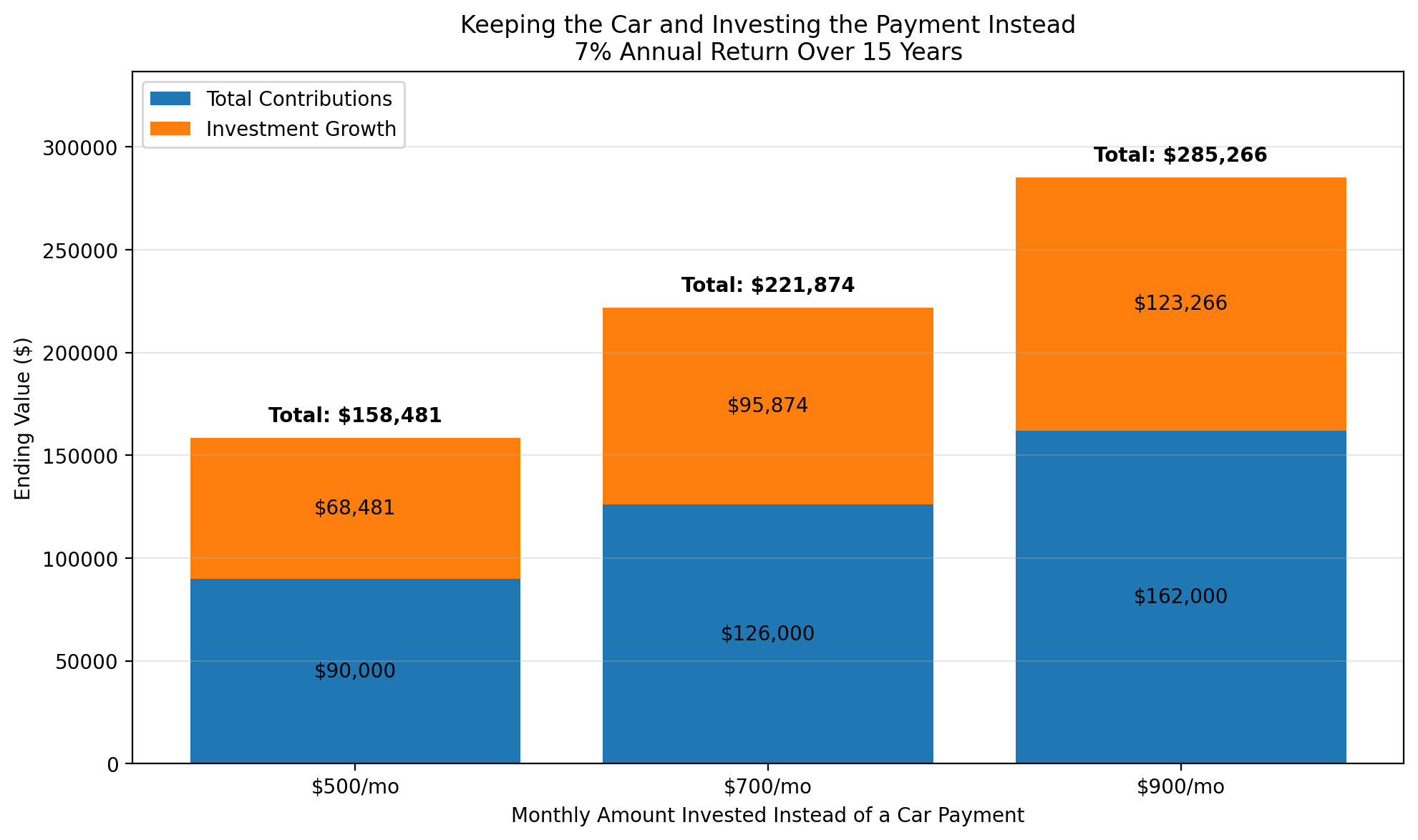
In other words, the difference between replacing a car every five to six years, and simply keeping a reliable one could easily exceed six figures over time.
Another angle to consider is that you will save massive amounts of money on car insurance by buying used vehicles and keeping your vehicle as long as possible. Continuously buying new keeps resetting your insurance prices to higher tiers.
Many people try to accelerate their path to financial independence by chasing higher returns on investments. However, one of the simplest ways to build wealth is often much less exciting- simply avoiding unneccessary expenses in the first place.
Used Prius Wealth Effect Number 3
Reliability reduces financial risk
One of the biggest reasons people replace their vehicles frequently is fear of expensive repairs. Many drivers assume that once a car passes 100,000 miles it becomes a financial time bomb.
In reality, the reliability of certain vehicles completely changes this equation.
Toyota hybrids — particularly the Prius — have earned a reputation for durability that is almost unmatched in the automotive world. It is not unusual to see well-maintained Prius models surpass 250,000 miles, and many have gone well beyond 300,000 miles.
As someone who has worked as a Toyota service technician since 2010, I regularly see vehicles with extremely high mileage still operating reliably.
This reliability matters financially because it reduces the risk that usually scares people away from keeping their vehicles long term.
When a car is dependable, the owner can confidently continue driving it after the loan is paid off instead of replacing it out of fear.
Every additional year of payment-free driving increases the financial advantage.
But what about repair costs?
No matter how well engineered a vehicle is, by the time the odometer approaches 200,000 miles, repairs are inevitible. So lets talk about some general estimates as to what it may take to have common repairs performed on a Gen 3 Prius, and why the math still favors long term ownership. I would post up my own math, but it would be skewed because I do my own labor.
Major Maintenance Over 300,000 Miles
Hybrid battery replacement: $2,500 – $3,500
Brake actuator replacement: $1,500 – $2,000
Aftermarket shocks and struts: $700
New tires: $1,800 – $2,400
65 oil changes: $2,000 – $3,000 depending on DIY or shop
Engine replacement and/or head gasket replacement: $3,000 – $5,000 depending on used engine / labor
Based on this math, the cost to keep the vehicle on the road would land between $16,600 and $20,000, which is still less than half the price of many new vehicles on the market today. Many drivers fear a $3,000 repair bill, yet think nothing of signing up for a $700 monthly payment that ultimately costs far more over time.
Over the life of my Prius, I replaced the hybrid battery, brake actuator, tires (several times), and even the engine with a low mileage JDM engine. Yet the total cost of those repairs still falls far short of what many people spend replacing vehicles every five to six years.
Meanwhile, as my car depreciated over time, insurance costs steadily fell. After making the necessary repairs, I can confidently know that I can jump in the car and reliably drive another 200,000 miles without financing my future away.
The real financial advantage of a reliable car isn’t that it never needs repairs — it’s that even when it does, the math still beats replacing it.
Used Prius Wealth Effect Number 4
Ultra-Low Capital Cost Per Mile
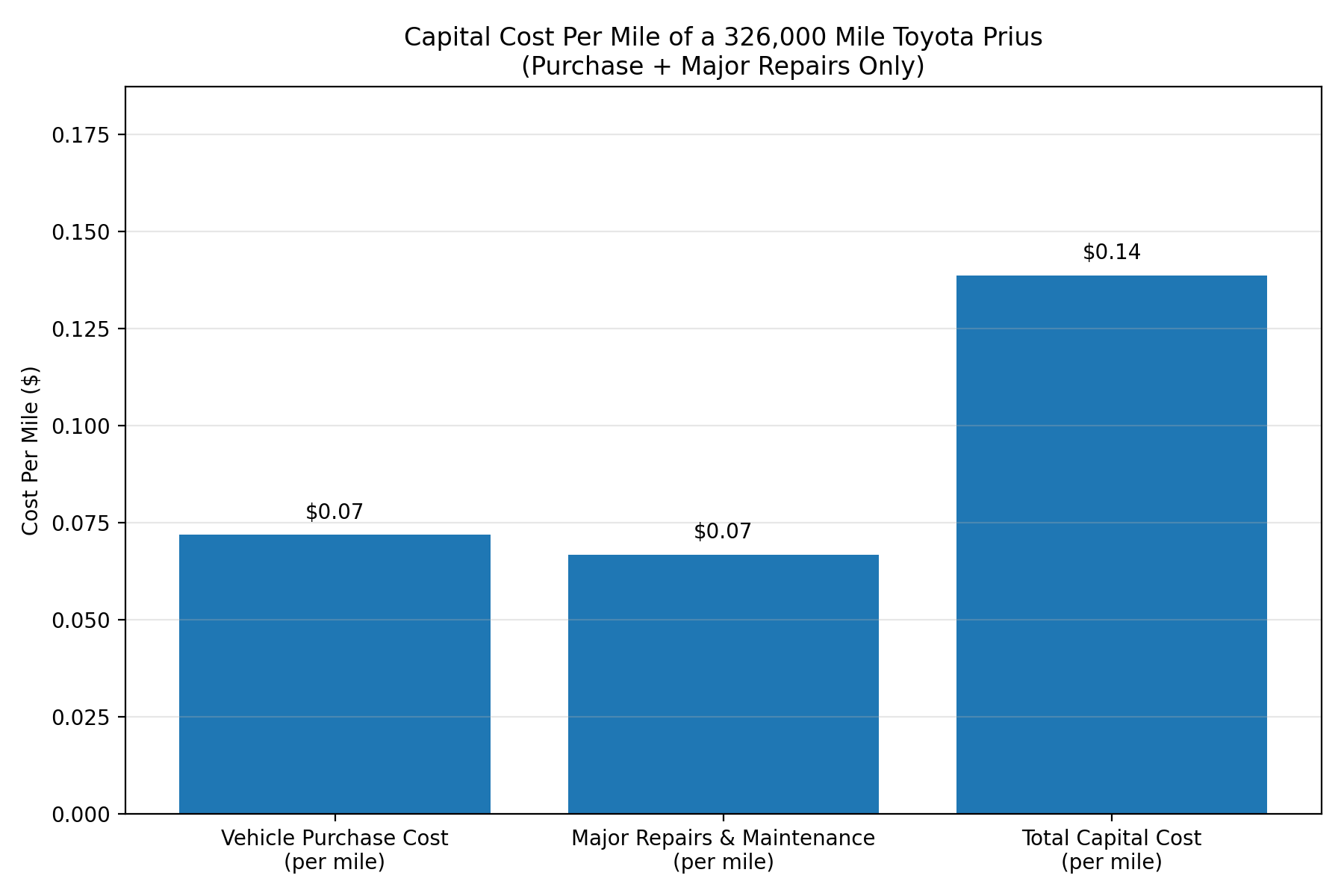
The capital cost of my Prius works out to 14-16 cents per mile. Long-term ownership dramatically lowers the capital portion of vehicle owner ship costs.
No way, you say? Yes way.
A reliable used Toyota Prius can certainly achieve that remarkable feat. Here's how I've arrived at this number:
Purchase Cost: $19,376
Maintenance and Repair Costs: $18,000
Total: $37,376
Miles Driven
- Purchased car at 56,660 miles
- Current mileage is 326,000 miles
- Total miles driven by me: 269,340 miles
Total Capital Costs = Total lifetime capital costs of $37,376 divided by the 269,340 total miles driven: $0.14 per mile
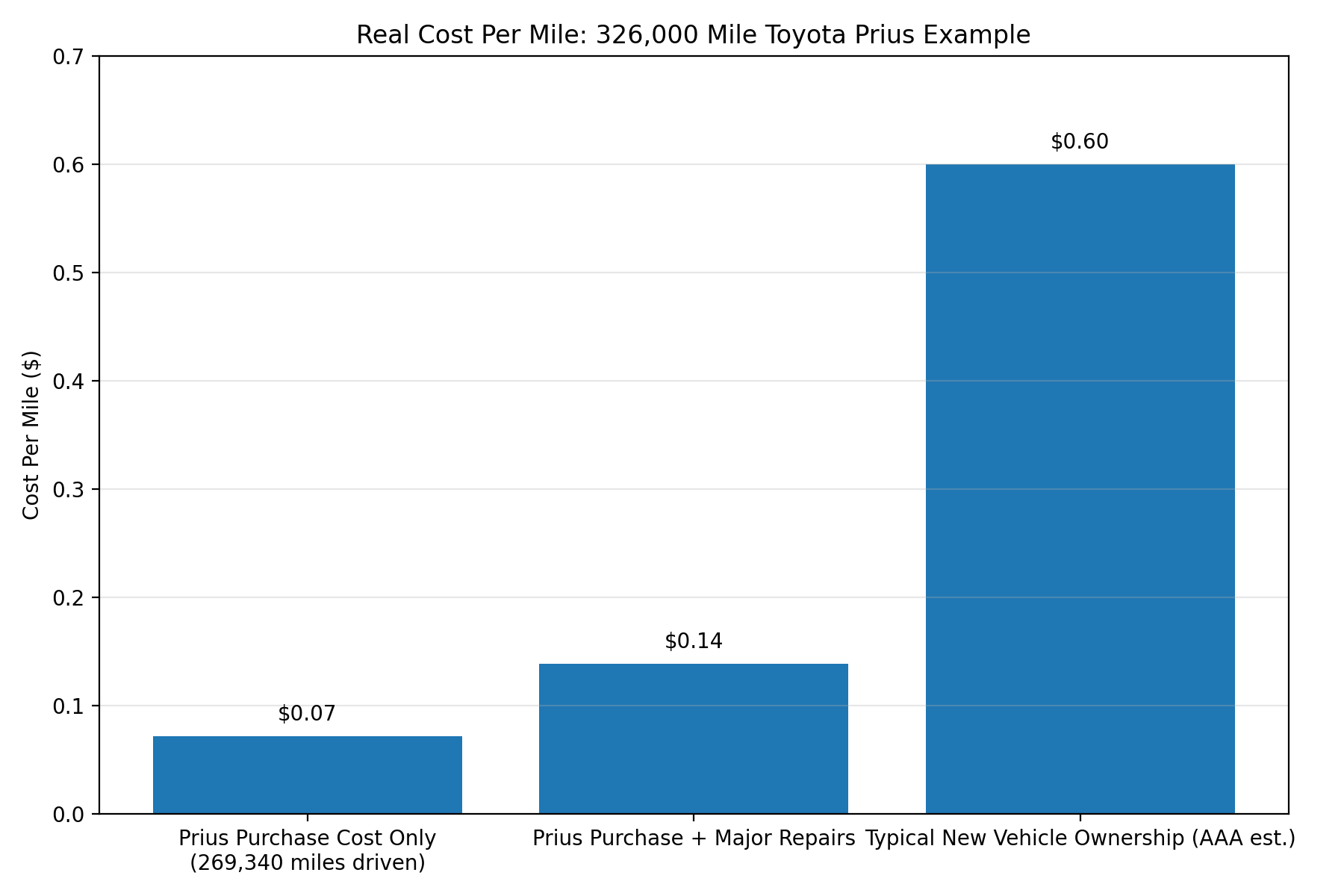
Even including major repairs like a hybrid battery replacement, and an engine swap, the numbers still come out lower than typical new vehicle ownership costs.
That's insanely low. And that explains why every other gig economy worker you see is likely relying on a Prius.
Prius Wealth Effect 5
Fuel Efficiency Compounds Over Time
How can we talk about the legendary Toyota Prius without considering how ownership of the vehicle decreases fuel costs dramatically? Fuel efficiency is what the entire vehicle is engineered for, and the Prius overachieves in this objective. Let's take a look at the fuel cost savings achieved during my course of Prius ownership.
I wish I actually kept a historical log of fuel purchases, but for this article, we'll use historical fuel price averages paired with miles driven over time to give us a very accurate picture of how well 2010-2015 Prius vehicles perform at saving fuel.
For the duration of my Prius ownership, the average price of 87 octane gasoline in the state of Texas has been $2.55 per gallon, and my vehicle has averaged 45 miles per gallon since 2015.
Considering I've driven the vehicle 269,340 miles achieving an average of 45 mpg, meaning that my Prius has consumed approximately 5,985 gallons of gasoline.
Given an average price of $2.55 per gallon, that brings the total amount spent on gasoline to approximately $15,200.
That brings the cost of fuel to roughly $.06 per mile after dividing the total cost spent by miles driven. Outstanding.
So now, when we take capital costs and fuel costs into account, we see the entire picture of the cost of Prius ownership, and its amazing. We're looking at about $0.20 per mile.
Keep in mind, these were not easy wind at the back, downhill "hypermiling" type miles. A significant portion of these miles were commercial rideshare miles and private courier miles performed over the course of multiple Central Texas summer seasons.
Final Takeaway
The Prius is one of those rare automobiles that can help you navigate pothole-ridden downtowns successfully while simultaneously helping endure precarious economic conditions thanks to its extremely capital and operating costs.
By driving a reliable Prius to 326,000 miles, the total cost of ownership comes out to roughly twenty cents per mile — a fraction of the cost of replacing vehicles every few years.
These savings, if used responsibly, can be passed on to investments to help you hit "escape velocity" and live life on your terms.
AAA estimates that in 2026 the average vehicle costs between $.60 and $0.80 per mile to operate. For a little thought experiment, let's just say the average vehicle in the United States costs $0.70 per mile to operate.
By driving a paid off Prius, someone could be saving roughly $0.50 per mile compared to an average vehicle. Those savings stack up fast as the miles accumulate. In the case of my vehicle, I've driven 269,340 miles... potentially saving $134,670 in capital and operating costs.
Some things in finance are indeed complex. But in this case, the formula for winning is dead simple. Buy a used Prius. Maintain it. Don't trade it in. Drive it as long as possible. Win.
Support the site
If you found this article useful, you can support the site by checking out the tools and parts I recommend here. It doesn’t cost you anything extra, but it helps keep TopFives running.