How To Greatly Reduce Brake Squeal on 2022+ Toyota Tundras
As an Amazon Affiliate Associate, this website earns commission from qualifying purchases.
The procedures and modifications described in this artlicle assume a moderate to advanced level of automotive knowledge and experience. Brake systems are safety critical components of your vehicle. If you are not comfortable performing brake repairs or are unsure about any part of this procedure, consult a qualified professional technician. Always follow proper lifting techniques and repair manual torque specifications when servicing your vehicle.
Modification 1
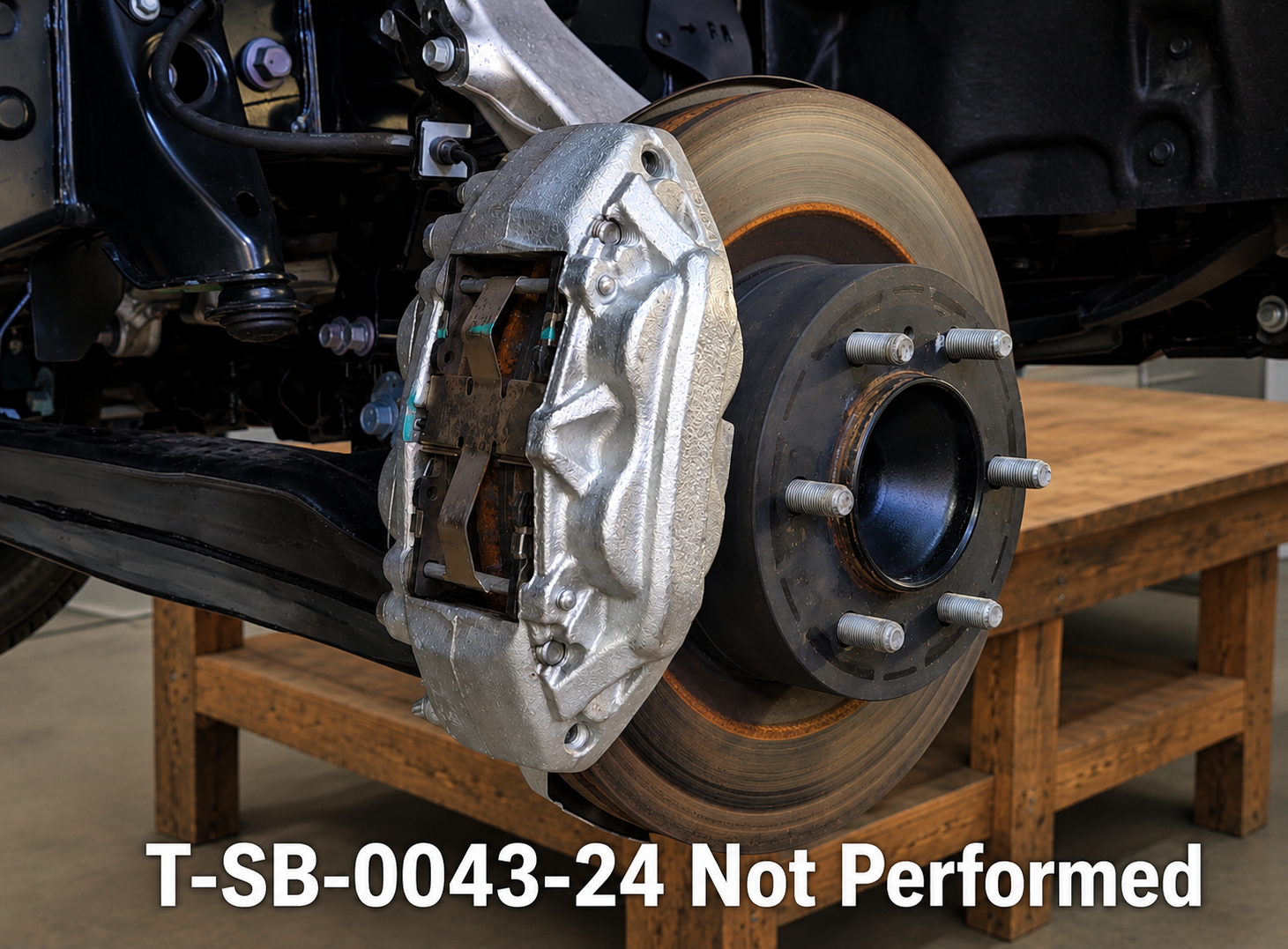
Step one of making sure your Tundra brake squeal noise will be eliminated is to determine of the brake parts upgrade from ToyotaT-SB-0043-24 has been performed. If your front brakes look like the photo below, the upgraded parts have not been installed.
Once the upgraded front brakes have been installed per Toyota's recommendations in T-SB-0043-24, this gives you a solid baseline to work with. The picture below shows what the front brakes look like after the upgraded parts are installed per the Technical Service Bulletin. The biggest changes are: different brake pad shims, new anti rattle spring, different brake pads, and new rotors. When the upgraded rotors are installed, they also have yellow dots on the rotor hat.
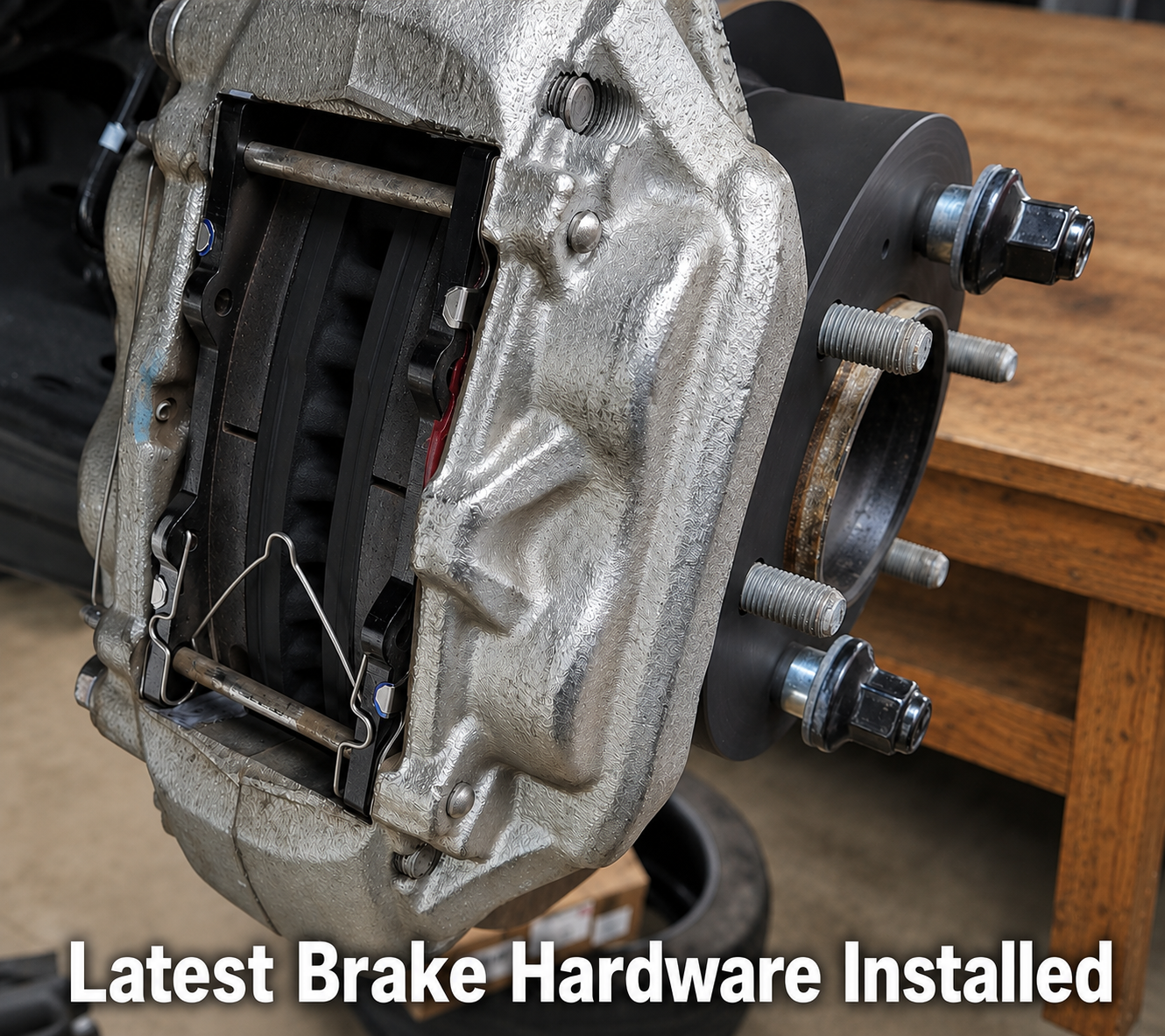
Often times, there is a noticeable difference in brake squeal in reverse and at low speeds after the upgraded parts have been installed. However, the noise sometimes does not completely disappear. Here's what I do to greatly reduce noise even further.
The front brake pads are extremely sensitive to vibration and harmonics when it comes to noise generation. To counter this, I first remove the brake pads from the caliper and remove the stainless steel shims from the pads.
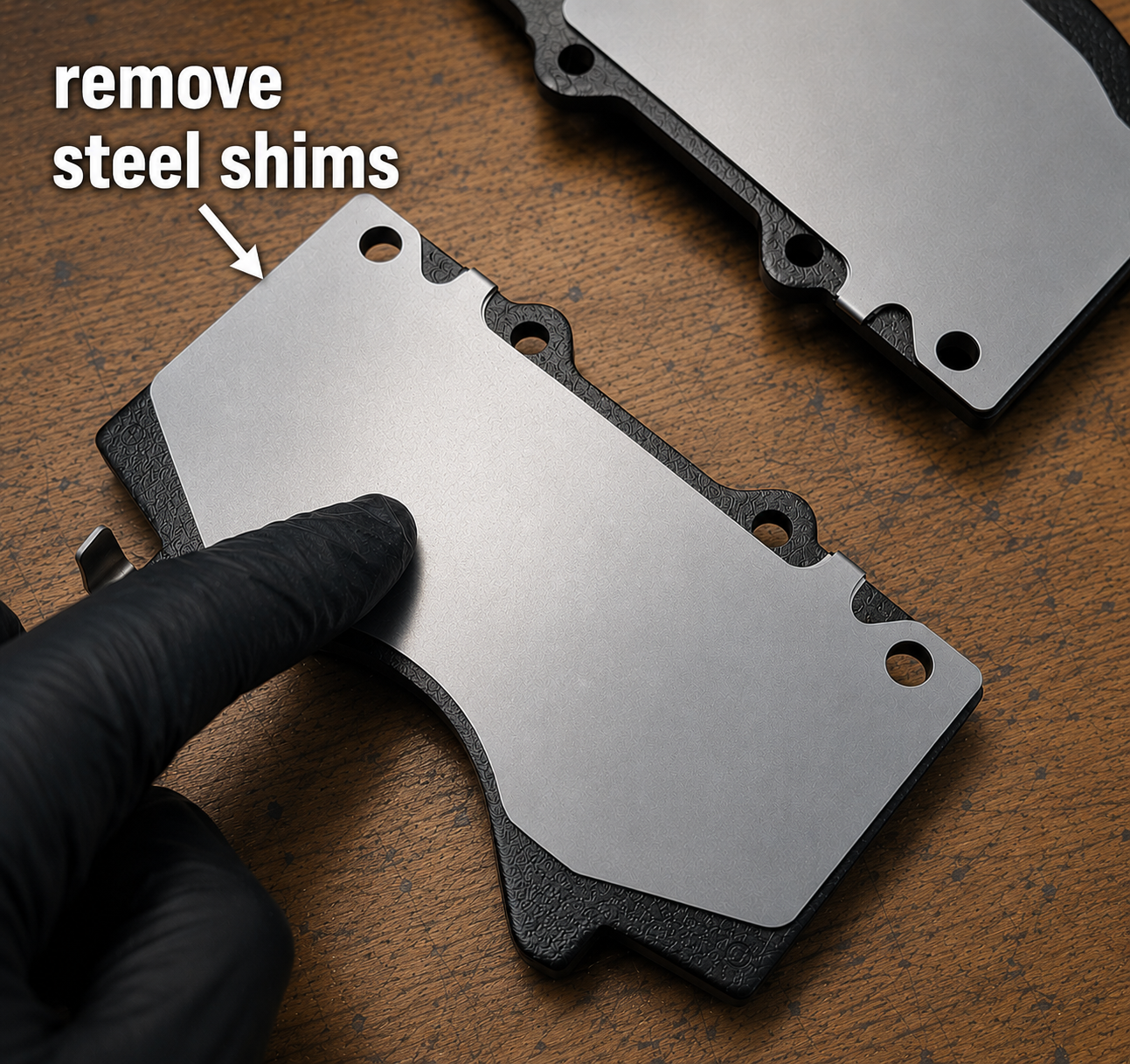
Once the shims are removed, apply silicone to the non-friction sides of the brake pads. My preference of silicone for this purpose can be found here. This silicone grease appears to absorb high frequency vibration better than the grease that is provided with the upgraded brake pads per T-SB-0043-24. Apply the grease to the back of the brake pad (non-friction surface) and smear it evenly with your finger over the surface of the brake pads.
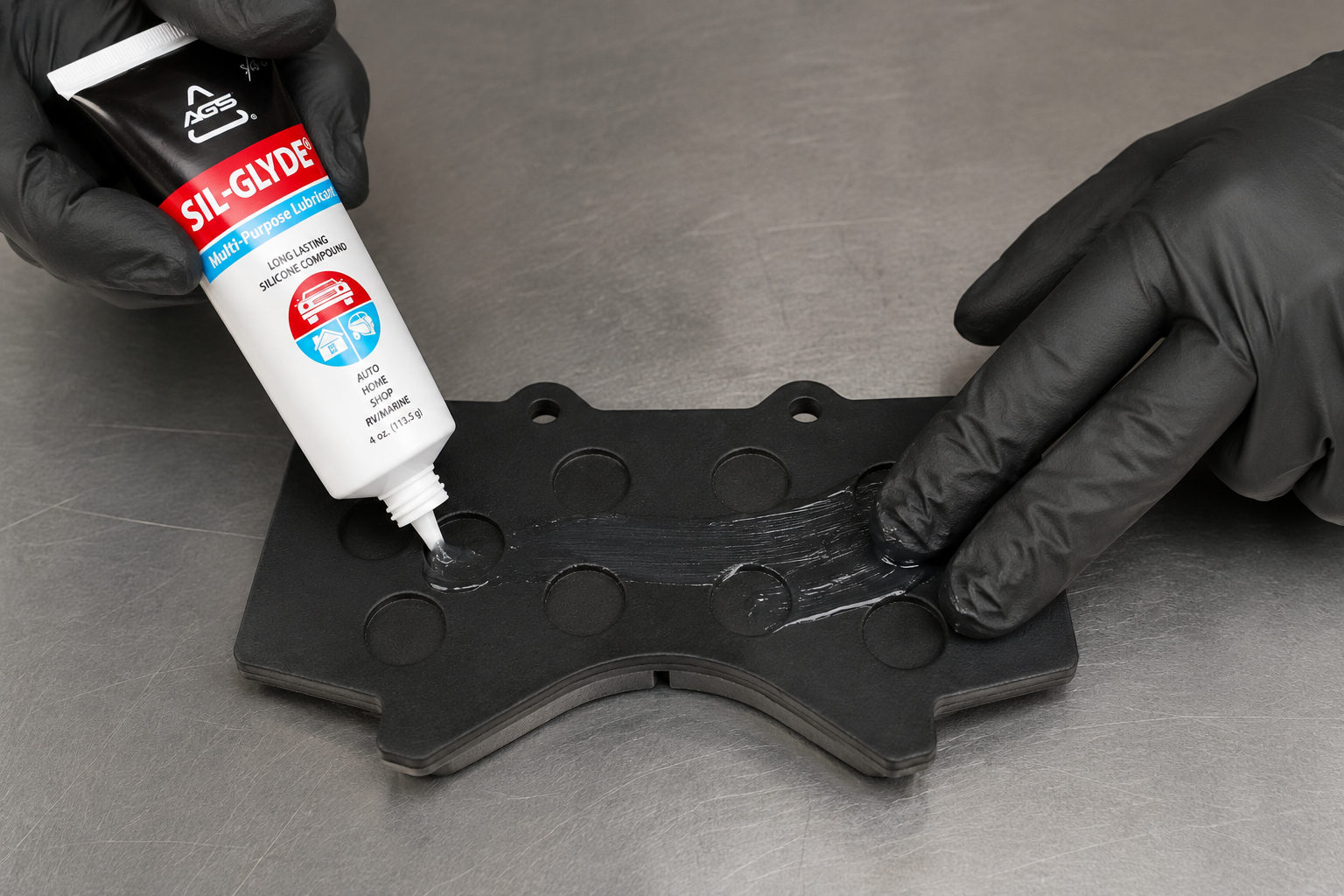
Once the silicone is evenly distributed throughout the surface of the brake pad, reinstall the shims to all the brake pads.
Modification 2
Another thing I do is apply Stop Squeal compound to the friction surface of all of the brake pads. After evenly applying it to all of the brake pad friction surfaces, I allow it to dry completely before reinstalling brake pads to the brake caliper. Depending on ambient temperature, this can take anywhere between 30 minutes to an hour. After the Stop Squeal compound has fully dried, reinstall the brake pads to the front calipers.
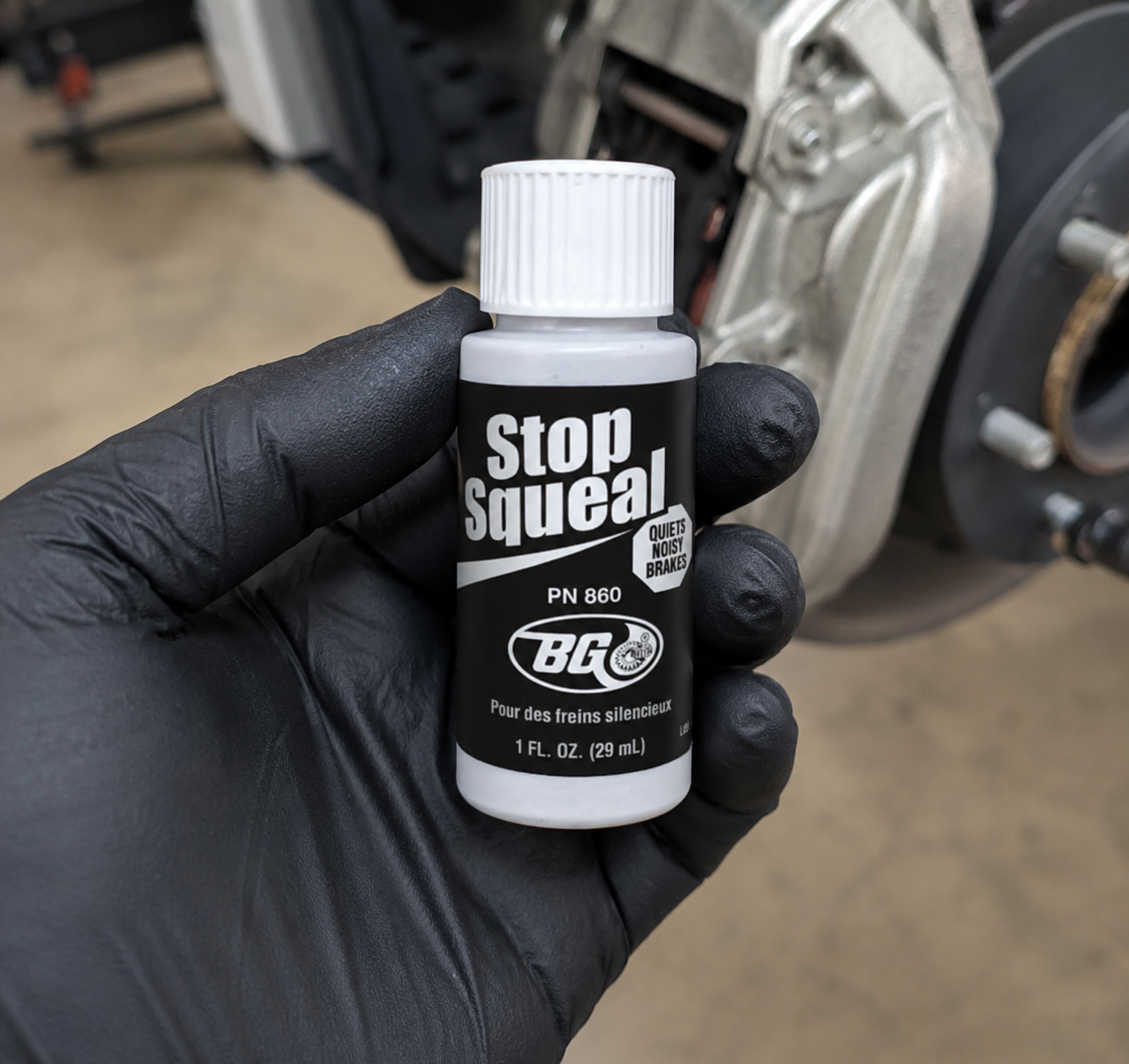
Reducing brake noise to a tolerable level on Tundras can be challenging. For the past year, I have achieved consistent noise free front brake repairs on 2022+ Tundras by using vibration absorbing silicone and the stop squeal compound together.
The only remaining variable is how long this method lasts, but for now, I've had no complaints or comebacks after applying this method.
In addition, be sure not to overlook the rear brakes. Even though the front brakes are most prone to noise, always be sure to inspect the rear brakes while the vehicle is being serviced. In some cases, I have noticed that the rear brake pads have actually worn out before the front pads on 2022+ Tundras.